
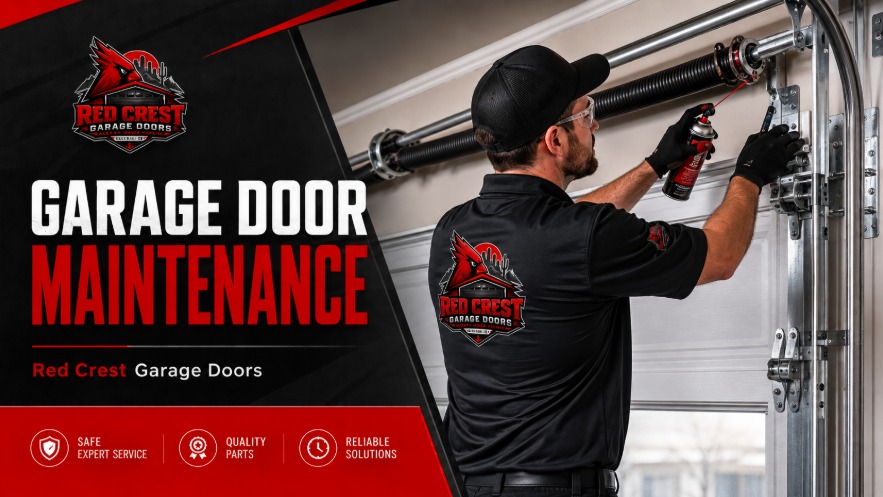
Garage Door Maintenance
A garage door works hard every day, yet it is one of the mechanical systems in a home that is easiest to forget about until something goes wrong. Springs, cables, rollers, hinges, tracks and opener components all wear gradually, and many problems develop long before the door actually stops moving.
Routine garage door maintenance is designed to catch those changes early. A professional inspection can identify worn hardware, loose fasteners, poor balance and developing safety issues while the door is still operating normally.
Why Regular Maintenance Matters
The main purpose of garage door maintenance is not simply to make the system last longer. It is to reduce the chance of an unexpected breakdown.
Many serious garage door problems begin with small warning signs. A cable may start developing broken strands. A roller may become rough. A hinge can begin cracking around a mounting hole. A spring may show signs of wear before it finally breaks.
These problems are easy to overlook during normal daily use because the door may continue opening and closing. A maintenance visit gives the entire system a chance to be inspected before minor wear becomes a larger repair.
Inspecting the Garage Door System
A proper service should cover much more than applying lubricant.
The technician checks the major mechanical components and looks for anything that has become loose, worn, damaged or incorrectly aligned.
Important inspection points include:
- Torsion or extension springs
- Lift cables and cable drums
- Rollers and roller brackets
- Hinges and mounting hardware
- Vertical and horizontal tracks
- Bottom brackets
- Weather seals
- Opener attachment points
- Safety sensors
- Door balance
The goal is to evaluate how all of these parts are working together rather than concentrating on one component.
Checking the Springs
Garage door springs carry much of the load required to raise and lower the door.
During maintenance, springs should be inspected for corrosion, unusual gaps, distortion and other visible signs of deterioration. The technician can also evaluate the door's balance, which provides useful information about how effectively the spring system is supporting the door.
A door that has become noticeably heavier or refuses to remain partially open may have a spring problem even if nothing has broken yet.
Spring adjustments can involve significant stored energy and should be handled by someone familiar with the system.
Inspecting Lift Cables
Lift cables are under tension whenever the garage door is operating.
Over time, individual cable strands can begin to fray, particularly near drums, brackets and other contact points. Rust, kinks and uneven cable tension can also indicate that attention is needed.
A damaged cable should not be ignored simply because the door still operates. Once enough strands weaken, the cable can fail suddenly and cause the door to lift unevenly or leave one side unsupported.
Regular inspection makes it more likely that cable wear will be found before reaching that stage.
Rollers, Hinges and Moving Hardware
Every time the garage door moves, the rollers travel through the tracks while the hinges allow the door sections to bend around the curved portion of the system.
That repeated movement gradually wears both components.
Rollers may develop flat spots, noisy bearings or excessive movement. Hinges can loosen, crack or begin pulling away from the door sections. Fasteners may also work loose after years of vibration.
During maintenance, worn components can be identified and loose hardware can be tightened where appropriate.
Track Inspection and Alignment
Garage door tracks need to remain properly positioned for the rollers to move smoothly.
Bent track sections, loose brackets or small alignment changes can create rubbing, shaking and unnecessary resistance. That resistance places additional load on rollers, hinges and the garage door opener.
The tracks should be inspected for damage and secure mounting. They should also remain properly aligned with the door.
Tracks generally do not need to be packed with heavy grease. Excess lubricant can collect dirt and debris, which may make operation worse rather than better.
Proper Garage Door Lubrication
Lubrication can reduce friction and noise, but it needs to be applied to the correct components.
Depending on the type of garage door, lubrication may be appropriate for hinges, spring coils and certain roller bearings. The opener rail or drive system should be treated according to the manufacturer's recommendations.
More lubricant is not necessarily better. Applying excessive oil or grease can attract dust and leave residue on the door and surrounding surfaces.
Maintenance should focus on using the correct product in the correct locations rather than spraying every moving part.
Testing Garage Door Balance
Door balance is one of the most important parts of a maintenance inspection.
With the opener disconnected, the door can be moved manually to determine how much effort is required to lift it. It should move smoothly without feeling excessively heavy.
A properly balanced door should also remain reasonably stable at different points in its travel.
If the door falls rapidly, shoots upward or requires significant effort to move, the spring system may need attention.
Good balance is important because the opener is designed to move the door, not carry its full weight.
Maintaining the Garage Door Opener
The opener should be inspected along with the door itself.
Mounting brackets, the rail, trolley, drive mechanism and door connection should all remain secure. Unusual vibration or new noises may indicate wear in the opener or additional resistance in the door.
Travel limits and operating force should also be checked when necessary.
An opener that has to fight against a poorly balanced or binding door will generally experience more wear than one operating a properly maintained system.
Safety Sensor Inspection
Photo-eye sensors are an important part of the automatic closing system.
The sensors should be firmly mounted, correctly aligned and free of dirt or obstruction. Their wiring should also be inspected for loose connections, cuts or other damage.
A sensor problem may cause the door to refuse to close or repeatedly reverse.
Cleaning and checking the sensors during regular maintenance can help prevent frustrating intermittent problems.
Weather Seal Inspection
Weather seals are often overlooked because they do not affect the basic lifting mechanism, but they play an important role in protecting the garage.
The bottom seal and perimeter weather stripping should be checked for cracking, flattening, gaps and missing sections.
Worn seals can allow water, dust, insects, leaves and outside air into the garage. They can also make the door look poorly fitted even when the mechanical system is operating correctly.
Replacing deteriorated seals can improve both protection and appearance.
How Often Should a Garage Door Be Serviced?
For many residential garage doors, an annual inspection is a practical maintenance schedule.
Doors that operate very frequently may benefit from more frequent attention. This can include busy households, shared garages, rental properties and commercial applications.
The appropriate schedule depends on the number of daily cycles, the type of spring system, the age of the door and the environment around it.
A garage door used several times every day naturally accumulates wear faster than one that opens only occasionally.
Maintenance for Rental Properties
Garage door maintenance can be particularly useful for rental properties because developing problems may not always be reported.
A tenant is likely to notice when a door stops working completely, but may not recognize early symptoms such as slight cable fraying, increasing vibration or a roller becoming noisy.
Scheduled inspections provide an opportunity to identify those issues without depending on someone noticing subtle changes in operation.
For property managers handling multiple locations, consistent maintenance can also make future repair needs easier to plan.
What May Be Replaced During Maintenance
Many maintenance visits require only inspection, adjustment, lubrication and testing.
If worn parts are discovered, replacement may be recommended depending on their condition.
Common maintenance-related items include rollers, cables, hinges, weather seals, sensors and other small hardware. Springs may also require attention if their condition or the door's balance suggests they are approaching the end of their useful service life.
Any additional repair should be explained before parts are replaced.
Listen for Changes in Operation
Homeowners can help identify developing problems by paying attention to how the door sounds and moves.
New grinding, scraping, popping or rattling noises deserve investigation. The same is true if the door begins shaking, moving unevenly or taking longer than usual to open.
A change in operation does not always mean that a major component is failing, but it often indicates that something has become loose, worn or misaligned.
Addressing those changes early can prevent additional strain on surrounding components.
Garage Door Safety Tests
Routine maintenance should include testing the opener's safety features.
One important check is the photo-eye test. While the door is closing, interrupt the sensor beam. The door should stop and reverse rather than continue downward.
The automatic reversal function should also be tested according to the opener manufacturer's instructions to confirm that the system reacts correctly when resistance or an obstruction is detected.
If a garage door does not respond properly during a safety test, the problem should be corrected before normal automatic operation continues.
Simple Maintenance Between Professional Visits
There are several things homeowners can safely monitor between service appointments.
Keep the sensor lenses clean, watch for obvious cable damage, listen for changes in sound and check the weather seals periodically. It is also useful to observe whether the door continues moving evenly on both sides.
Avoid attempting spring, cable or bottom-bracket adjustments without the proper training and equipment. These parts can remain under substantial tension even when the garage door is not moving.
Preventive Maintenance Helps Avoid Larger Problems
Garage doors rarely go from perfect condition to complete failure without some form of wear developing first.
Regular inspection provides an opportunity to find those warning signs while repairs are still easier to manage. Keeping the door balanced, hardware secure, moving parts maintained and safety systems working correctly also reduces unnecessary strain on the opener.
A well-maintained garage door should move smoothly, stay properly aligned and operate without unusual noise or excessive effort. Routine attention helps keep it that way while reducing the likelihood of an unexpected failure.